
Understanding Backflow: What It Is and Why It Matters
Backflow is an industry term for a condition where water inside your building’s plumbing system flows back out into the city water main. This is caused by conditions like water main breaks, which result in a drop in pressure in the city water main to below that of the pressure in your building’s plumbing system — causing water to flow backwards, out of the building and into the main.
The Hidden Danger: How Backflow Can Contaminate Your Drinking Water
Backflow can be potentially hazardous, as it creates the possibility for contaminants to enter the potable, or drinkable, water supply. Imagine a scenario where there is a mop sink full of water and cleaning solution, with a hose connected to the faucet. In conditions of backflow, the pressure in the city main drops, drawing water from the building back out into the main. That hose could siphon the cleaning solution back into the building’s plumbing — and then into the city main. That cleaning solution could ultimately end up in someone’s drinking water or shower, creating a serious risk of poisoning or chemical burns. It’s a scenario that sounds unlikely, but it’s exactly the kind of event that backflow preventers are designed to stop.
What Is a Backflow Preventer and How Does It Work?
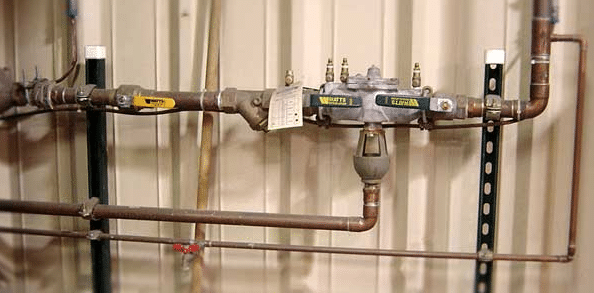
A backflow preventer is a device installed in your plumbing system, usually consisting of one or more check valves, that prevents water from flowing back out of your building’s plumbing once it has entered. A check valve is a valve that allows water to flow in only one direction — and the best backflow preventers have two of them. When installed correctly and functioning properly, a backflow preventer ensures that backflow cannot take place, protecting our potable water supply for everyone in the city.
Philadelphia’s Backflow Preventer Requirements: Is Your Property Covered?
In the City of Philadelphia, all commercial, industrial, and office buildings, as well as residential buildings with more than four dwelling units, are required by law to have a backflow preventer installed. These devices must also be installed, repaired, and inspected annually by a registered Master Plumber who has received specialized training in backflow prevention and is certified by the Philadelphia Water Department to perform such work.
If you own a single-family home, your property has likely been deemed low risk and does not require a backflow preventer. However, if you own a commercial or multifamily property, failure to have a backflow preventer installed and inspected on an annual basis can result in the Water Department shutting off water to your building until compliance is demonstrated.
Stay Compliant — and Keep Your Water On
The consequences of non-compliance aren’t just a fine — they’re an interruption to your entire operation.