
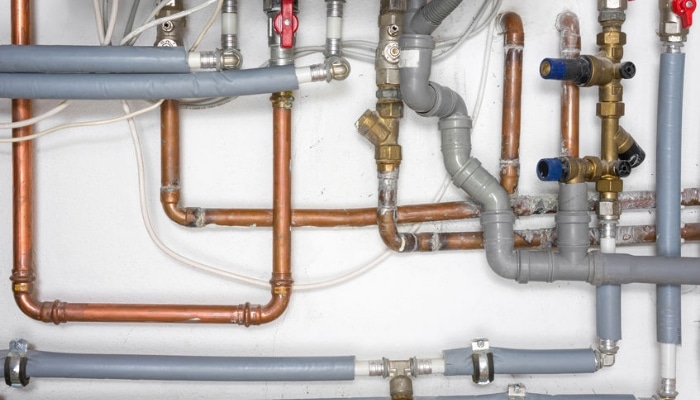
Your pipes work hard every day to keep your Philadelphia home running smoothly, but there’s a silent threat that could be quietly undermining your entire plumbing system: corrosion. At Summers Quality Services, we see the effects of corrosion firsthand, and we want to help homeowners understand what it is, what causes it, and most importantly, how to stop it before it becomes a costly repair.
Easily identifiable by the tell-tale green discoloration on copper pipes, flaky, rusty build up, and white mineral crust, corrosion plagues homeowners with failed, leaky pipes that can lead to costly repairs. So, what is corrosion? And if it could cost you money as a homeowner, how can you prevent it?
Corrosion is the gradual degradation of metals through natural chemical reactions with their environment. Often caused by exposure to water, oxygen, and other compounds found in water, it causes metals to deteriorate, wear thin, and eventually break down. That causes leaks in the case of your household plumbing. By the time corrosion sets in, there is nothing to be done but replace the affected pipe. It is important to understand its causes to identify potential corrosion before it happens, eliminating the need to make extensive repairs.
Common Types of Corrosion
Common types of corrosion often encountered in the field include pitting corrosion, erosion corrosion, dezincification, and galvanic corrosion.
Erosion corrosion — commonly found on valves, tees, and elbow fittings, is caused by high velocity water passing through a point in the plumbing system that either restricts or disrupts its flow. Often the valve will turn green and develop a white mineral crust. Gradually, the metal will become compromised to the point that a leak begins as a gradual drip which worsens over time. Valves that are overtaken by erosion corrosion become inoperable, and need to be replaced.
Pitting corrosion is similar to erosion corrosion, but it affects the pipe at small, isolated points, often resulting in “pinhole” leaks, where a slow, low volume stream of water is ejected from the pipe. This can be a particularly destructive type of leak, due to its slow and gradual nature. Since the leak is not dramatic and immediately recognizable, leaks like this can go unnoticed for long periods of time, often doing significant damage before they are discovered.
In a plumbing system that is experiencing dezincification, copper alloys like brass are used to make fittings. Water passing through the brass leaches out the zinc in the fitting, leaving behind a porous lattice of copper with a measurably reduced structural integrity. These weakened fittings then crack and leak if not replaced in time.
Finally, galvanic corrosion occurs when two dissimilar metals, such as copper and steel, come into contact in the presence of an electrolyte solution like water. Unfortunately, this happens frequently, as less knowledgeable plumbers and handy men install plumbing systems incorrectly. Something as simple as a steel hanger on a copper pipe can lead to corrosion of the pipe at the point of contact, which over time will lead to the pipe failing and leaking.
How Can You Prevent Corrosion?
So now that we know a bit about corrosion and its causes, what can be done to prevent it? Firstly, it is said that an ounce of prevention is worth a pound of cure, so always hire licensed professionals to perform installations and repairs in your home. A qualified professional will know the do’s and don’ts of plumbing, mechanical, and building code, which are designed to prevent corrosion from occurring in the first place. Use of dielectric unions to join dissimilar metals in your plumbing system, use of copper plated or epoxy coated hangers on copper pipes, opting for plastic pipe and fittings such as PEX or CPVC, and maintaining the anode rod in your water heater are all standard practice preventative measures that professionals employ to reduce the potential for galvanic corrosion to occur. Also, maintaining appropriate water pressure through the use of a pressure reducing valve may help prevent erosion corrosion and damage to plumbing fixtures in instances where water pressure is too high.
If you think your water heater is corroded and you need water heater repair, call Summers Quality Services today to avoid costly leak damage!
Unfortunately, we cannot prevent corrosion in every plumbing system 100% of the time. Like most problems we encounter in life, early detection is key, so make sure to have regular inspections of your property scheduled, like those offered in our Customer Care Plans. If corrosion is identified, replacing offending elements of the plumbing system, like steel hangers on copper pipe, will be necessary, and replacing valves that show early signs of corrosion is recommended before the situation develops into a full blown leak.
Through a little self education and vigilance, the savvy homeowner can identify warning signs of corrosion and hire a reputable, licensed, and insured professional like Summers Quality Services to remedy the situation before it becomes a problem.